

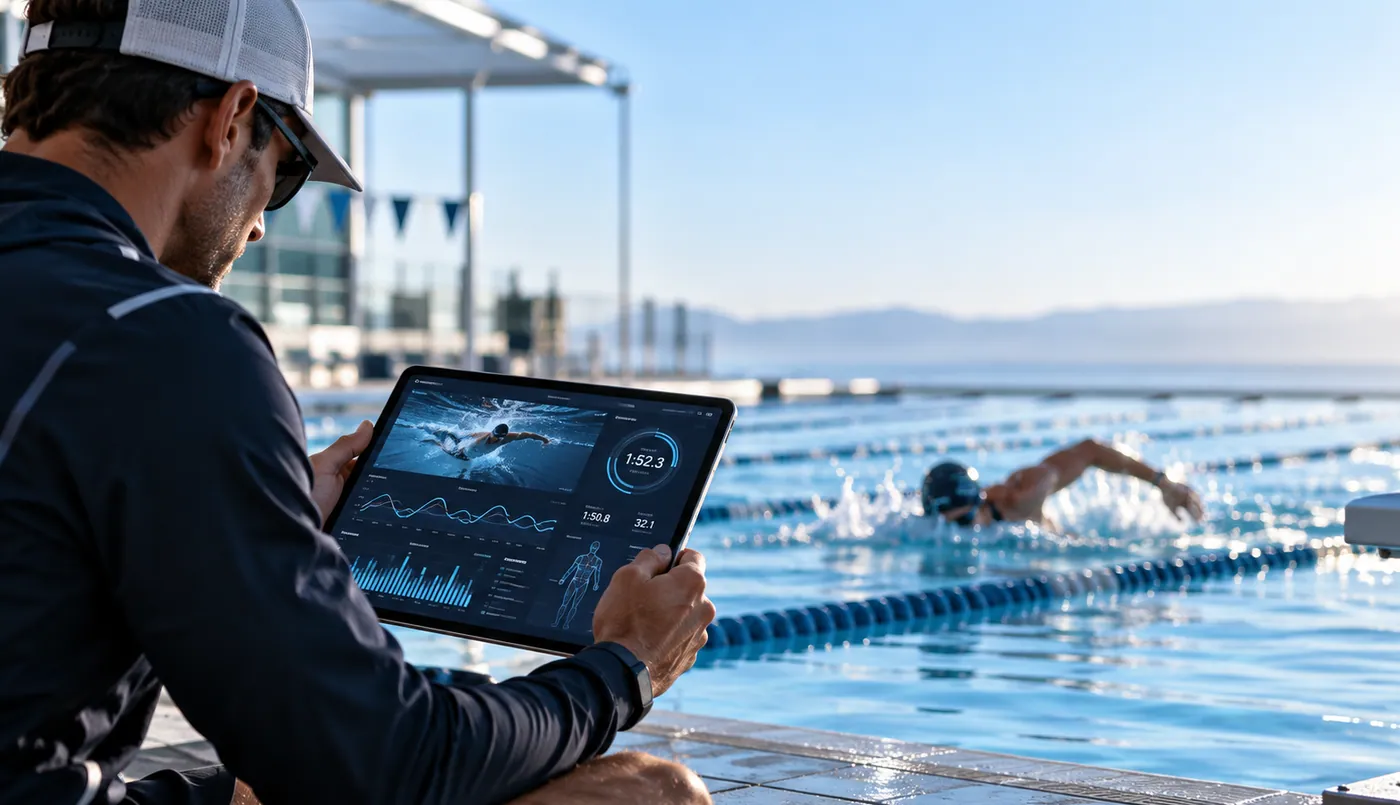
Training context
Plan and review the work a swimmer actually completes, not just the work that was intended.
A connected way to examine what training asks of a swimmer, what they can demonstrate in testing, and how those capabilities are expressed in competition.
AthlyraX separates the work a swimmer performs from the capacity they demonstrate and the way they race. The goal is to understand their relationship, rather than mistake one measure for the whole story.
Plan and review the work a swimmer actually completes, not just the work that was intended.
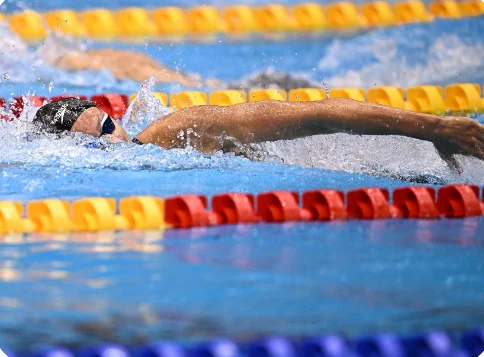
Separate training evidence from what a swimmer expresses when speed, pressure and racing conditions change.
What was planned, completed and recorded during training.
What targeted measurements can show about capability.
What a swimmer expresses under racing demands.
The relationship between all three sources over time.
Performance is not a single attribute. The eight axes look at different dimensions of swimming capability, each supported by relevant evidence. Select any axis to explore what it means.
The profiles distinguish the demands of training, measured testing capacity and race expression before connecting them in one integrated view.
Training, testing and competition answer different questions, but AthlyraX evaluates their evidence using the same eight capability axes. That shared reference allows coaches to compare what training demands, what testing demonstrates and what a swimmer expresses in competition.
Are we training the capability? Is the swimmer demonstrating it? Can they express it when racing? The Integrated Profile connects these perspectives according to the available evidence and its confidence, without inventing scores where evidence is insufficient.
Describes the evidence captured from attended training and recorded set results.
Examines capability through appropriate test protocols and recorded measurements.
Shows performance expressed in races, drawing on relevant results and split-level evidence.
Brings those sources together while preserving the distinction between what is measured and what remains unknown.
Illustrative shapes only — not swimmer data or calculated scores.
AthlyraX is designed around measurement sufficiency, confidence and repeated observation. An axis should not be forced to a score if the necessary evidence is missing.
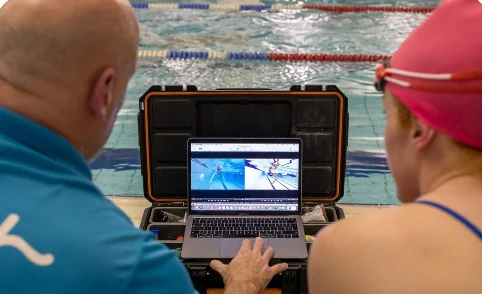
Scores should be supported by the relevant results, not assumed from impression alone. Confidence matters because some conclusions are based on stronger, more repeated evidence than others.
Is there enough relevant information to assess this capability?
How strongly does the available evidence support the displayed assessment?
Where evidence is insufficient, the framework identifies the gap rather than inventing a value.
Repeatable evidence across a season can help coaches distinguish short-term responses from longer-term development and examine why a capability does—or does not—translate into racing.
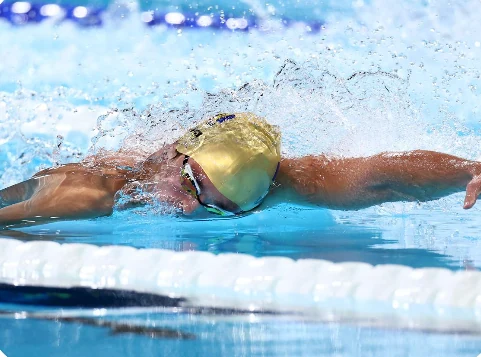
Track how current work is affecting the swimmer now.
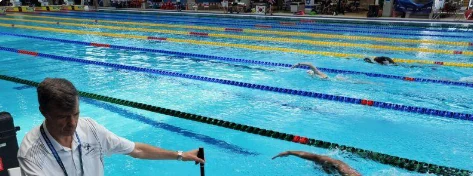
Review how planned changes influence training and testing outcomes.
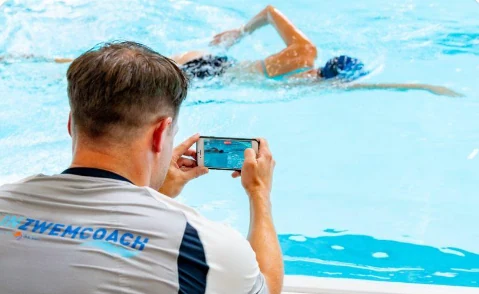
Compare patterns of training, racing and development over time.
Observe the effects of planned and attended training.
Compare measurements with the purpose of each training phase.
Review capability trends and competition expression in context.
The framework links the questions behind training, testing and racing with the evidence needed to answer them.
How consistently a swimmer executes the technical demands of their stroke, starts and turns.
Technique is assessed from relevant, recorded observations and measurements—not from appearance alone.
Focus on quality and repeatability of execution.
How effectively movement is translated into forward progress at a given speed or task demand.
Stroke measures and performance data are interpreted together when sufficient evidence exists.
Look at the relationship between speed, stroke length and stroke rate.
How well efficiency is maintained when the task becomes more demanding or fatigue accumulates.
Repeated efforts allow the profile to examine whether efficient movement persists.
Avoid treating one excellent repetition as sustained efficiency.
The ability to support and sustain work that places demands on aerobic energy supply.
Relevant training sets and aerobic tests contribute evidence according to their measurement and purpose.
Volume alone is not proof of aerobic capability.
The capacity to produce and repeat demanding efforts with a substantial anaerobic contribution.
Use suitable high-intensity work and test evidence rather than labelling effort from distance alone.
Intensity, duration and recovery all influence the demands.
How a swimmer expresses high speed and power in relevant performance situations.
Maximum-speed efforts, short-distance tests and competition performances provide evidence.
Peak speed and repeatable speed are not the same thing.
How a swimmer adjusts performance when conditions, pace, tasks or demands change.
Meaningful variations and measurable responses provide evidence of adaptation.
Changes must be measured before being scored.
How reliably a swimmer sustains performance quality across demanding work and over time.
Repeated and longer-duration evidence helps distinguish isolated performance from sustained capability.
Longitudinal evidence is important.
Press Escape or click outside to close.