01 / CAPTURE
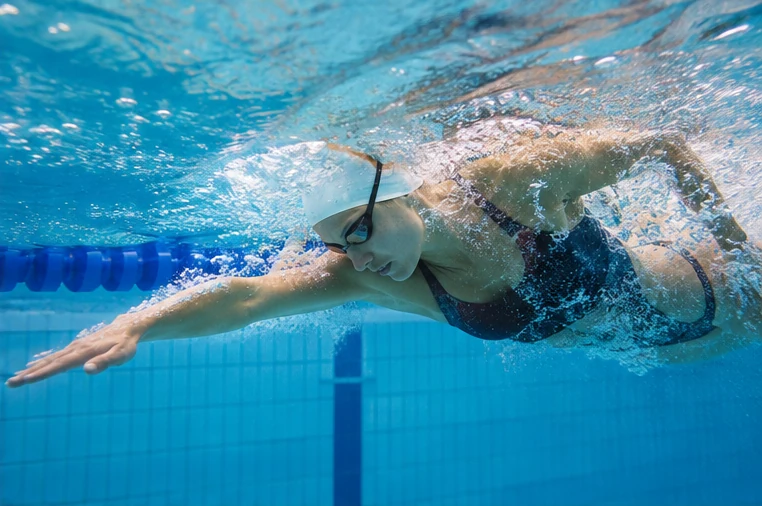
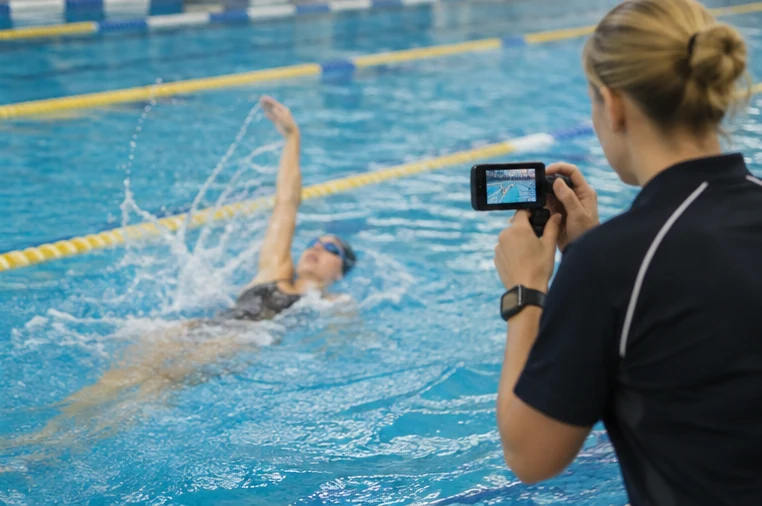
Record the movement
Use race or training video to preserve what happened and review technical details that a result alone cannot explain.
How to use it
Capture is the starting point: a clear, usable recording, the right swimmer and a known event or session.
Why it matters
Review swimming movement in context instead of relying on memory.
02 / OBSERVE
Look beyond the time
Examine stroke rhythm, body position, timing, turns and other visible elements, using repeatable observation rather than assumptions.
How to use it
Video observations should be distinguished from values that have actually been measured.
Why it matters
Identify specific points for coaching discussion.
03 / COMPARE
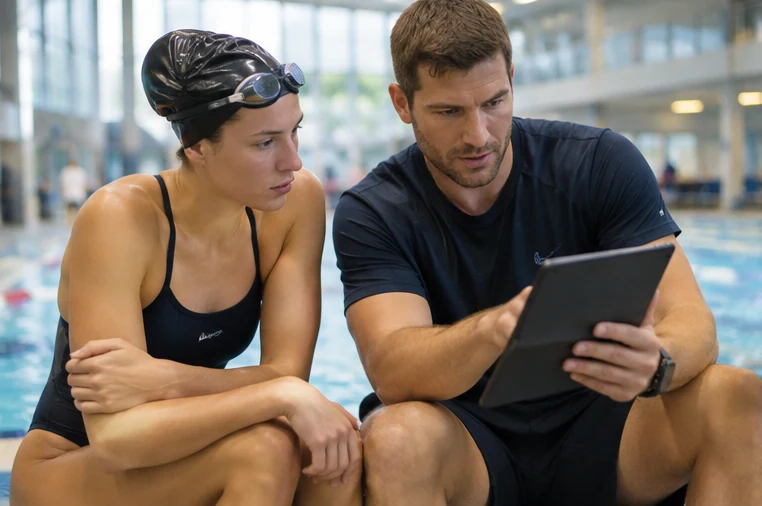
Compare performances
Set recordings from different efforts or occasions alongside one another to look for changes in execution and consistency.
How to use it
Comparisons need context: stroke, distance, conditions and the purpose of the effort.
Why it matters
See what is repeatable and what changes when demands change.
04 / CONNECT
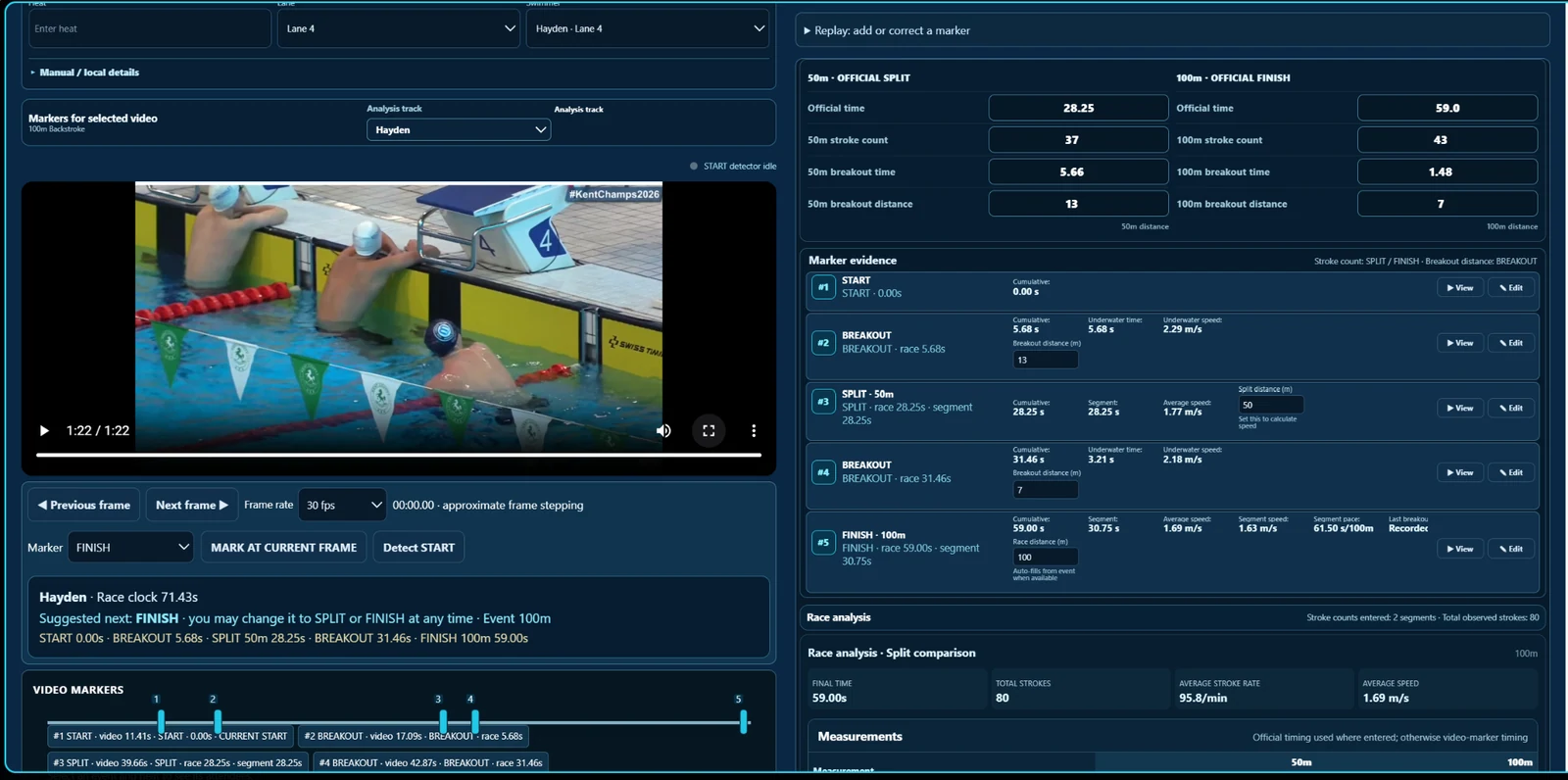
Connect video with evidence
Read technical observations alongside training, testing and race results to build a more useful picture of the swimmer.
How to use it
Video adds context; it should not automatically create a numerical capability score without supporting measurement.
Why it matters
Use visual evidence to ask better questions about performance.
Press Escape or click outside the panel to close.